Climate report (according to TCFD)
In addition to the impact of our business model on the environment, we are also looking at the extent to which environmental impacts and climate change affect our locations, operations and value creation along the entire value chain, or may in the future. As part of our legal obligations, we therefore report on the impact of climate-related risks and opportunities in accordance with the guidelines of the Task Force on Climate-related Financial Disclosures (TCFD) and the measures to proactively manage these.
Art. 3 CPO
Governance
The analysis of climate-related risks and opportunities is integrated into Galenica’s existing governance processes. Details on the responsibilities of the Board of Directors and the Executive Committee can be found in the chapter Sustainability organisation.
Strategy
Galenica regularly analyses the impact of climate-related risks on the Group. In accordance with the TCFD recommendations, we draw a distinction between physical risks from climate and weather events as well as transition risks or opportunities from decarbonisation and the associated legal, social, economic and technological changes. These may influence our business activities, strategy and financial planning through the necessary measures to reduce CO2. At the same time, climate-related opportunities may also arise, for example through efficiency gains and increased competitiveness. Climate-related risks and opportunities are systematically identified, categorised and assessed.
Risks are assessed qualitatively and categorised according to probability of occurrence and financial impact. In addition, the risks and opportunities are classified on a time scale: short-term (1–3 years), medium-term (3–10 years) or long-term (10+ years).
Factoring in different scenarios
When analysing climate-related risks and opportunities, we take into account various climate scenarios. Drawing on a data-based scenario analysis, the assessment of the future impact of the identified risks and opportunities on the business strategy was refined. To assess resilience to climate change, we consider three different scenarios that are based on the Intergovernmental Panel on Climate Change scenarios and are considered an international standard. These are each made up of a projection on the development of society and the economy (known as “shared socioeconomic pathways”, e.g. SSP1) and an associated figure on the greenhouse gas-induced heating output (e.g. 2.6):
- The “below 2°C” scenario corresponds to SSP1-2.6, which assumes global warming of below 2 degrees Celsius by the end of the century. SSP1-2.6 implies the most consistent climate-related transition of the economy and is therefore crucial for the analysis of transition risks.
- The “business as usual” scenario corresponds to SSP2-4.5, which assumes global warming of just under 3 degrees Celsius, and describes a middle ground.
- The most drastic climate change trend is represented by the “above 4°C” scenario (SSP5-8.5), which is suitable for an in-depth examination of physical risks.
“Below 2°C” scenario – SSP1-2.6
International cooperation promotes joint climate action and the efficient use of resources. A comprehensive switch to renewable energies and the introduction of circular economies reduce emissions and material consumption. Business and society are oriented towards sustainable practices, meaning that companies align their business models accordingly.
- Greenhouse gas emissions are drastically reduced in order to keep global warming below 2°C.
- Tends to be associated with high transition and lower physical risks.
“Business as usual” scenario – SSP2-4.5
This scenario is characterised by limited international cooperation and only gradual climate action. The energy supply remains heavily dependent on fossil fuels, while renewable alternatives are only slowly introduced. Production models remain predominantly linear and resource-intensive, while recycling is limited. The economy and consumption are still oriented towards conventional practices and sustainable decisions are only made some of the time.
- Greenhouse gas emissions remain high and global warming forecasts are well above 2°C, tending towards almost 3°C.
- Some intensified transition and physical risks.
Extreme value scenario – SSP5-8.5
International cooperation is weak and technological innovation focuses on efficiency and productivity rather than sustainability. The energy supply remains dominated by fossil fuels, with a strong focus on economic growth and high consumption. Sustainability plays almost no role, resource-intensive consumption grows steadily.
- Emissions continue to rise, leading to massive warming of 4°–5°C and extreme climate risks.
- Tends to be associated with low transition risks, but high physical risks.
Climate-related risks and measures
The risks identified in this way and their potential impact on Galenica are summarised in the following table.
Climate-related risks and measures
|
Category |
Risk/opportunity |
Impact description |
|
Extreme weather and flooding (physically acute) |
Disruptions in the supply chain due to extreme weather events and flooding |
Upstream supply chain and own sites |
|
Loss of sales or increase in costs due to supply problems with medicines, loss of suppliers, disruption in the supply chain, building and material damage, logistics interruptions |
||
|
1) medium term; 2) medium; 3) medium |
||
|
Temperature rise and heat stress (physically chronic and acute) |
Operating restrictions due to rising temperatures |
Own operations |
|
Lower sales/cost increase due to increasing staff shortages due to heat (in logistics and pharmacies), lower productivity, potential shortening of opening hours |
||
|
1) medium term; 2) medium; 3) medium |
||
|
Cooling requirements in pharmacies and logistics |
Own operations |
|
|
Increased energy costs, increased staff costs (skills) |
||
|
Requirement for cooling systems (due to rising temperatures) |
||
|
1) short term; 2) high; 3) high |
||
|
Climate-related health and behavioural changes among consumers |
Downstream supply chain |
|
|
Lower sales: Absence/reduced impact or postponement of allergy or flu season. |
||
|
People avoid cities and therefore visit pharmacies less (shift offline > online, resulting in lower margins), yet generally increasing demand for medical support due to environmental challenges and demographics |
||
|
1) short term; 2) medium; 3) medium |
||
|
Policy |
Increase in manufacturing costs for OTC drugs due to regulation |
Upstream supply chain |
|
Increasing regulation: increasing taxes and prices (certain raw materials or increased transport requirements, ESG EU criteria, electricity prices, CO 2 ) |
||
|
1) short term; 2) medium; 3) medium |
||
|
Rising operating costs due to climate action regulations |
Own operations |
|
|
Higher energy and operating costs |
||
|
Further regulations (CO): corresponding increase in staffing costs |
||
|
1) short term; 2) high; 3) medium |
||
|
Deteriorating transport conditions for delivery services due to CO 2 taxes |
Downstream supply chain |
|
|
CO 2 tax on transport services could reduce the gross margin for pharmacies. |
||
|
1) short term; 2) high; 3) medium |
||
|
Market |
Increasing sustainability requirements of business customers |
Downstream supply chain |
|
Increasing costs due to higher demands from the market and the deployment of staff |
||
|
1) medium term; 2) high; 3) medium |
||
|
Opportunity |
Innovation in working models triggered by climate change |
Own operations and downstream supply chain |
|
Changes in working time models required by climate change |
||
|
1) long-term; 2) high; 3) medium |
||
|
Offers in response to changing disease patterns due to climate change |
Downstream supply chain |
|
|
Higher temperatures lead to new diseases or diseases that were previously unknown within the scope of our preparations or deterioration of health, especially among vulnerable people. This increases the demand for services and products in pharmacies. |
||
|
1) medium term; 2) high; 3) medium |
||
|
Improved reputation due to focus on sustainability |
Own operations and downstream supply chain |
|
|
Sustainability as part of the value proposition: Galenica is perceived as an attractive employer and business partner |
||
|
1) medium term; 2) medium; 3) medium |
1) Time horizon: short-term = 1-3 years; medium-term = 3-10 years; long-term = >10 years
2) Probability of occurrence: Low = low probability <30%; Medium = possible 30% to 70%; High = very likely >70%
3) Financial impact (cash-out): Low <5 million; Medium 5-15 million; High >15 million;
Impact of climate-related risks and opportunities
The assessment shows that most risks are of a physical nature, such as flooding or landslides, which may cause acute disruptions in pharmacies and in the supply chain. For the Group’s own locations, software-based risk values were used to prioritise floods, extreme weather and extreme temperatures, which reflect river floods, storms and heat, among other things. For example, the extreme value scenario shows that the number of tropical nights and the duration of heat waves will more than double, particularly in the south and east of Switzerland and in urban areas (heat island effect).
Chronic physical risks due to long-term temperature changes could impact the entire value chain, especially the production of OTC medicines such as phytomedicine, which could necessitate a relocation of production.
In addition, climate-related changes could lead to productivity losses in the company's own operations and have more serious financial consequences, such as changes in disease patterns or climate-related behavioural changes among consumers. This could lead to lower sales or higher costs due to increased staff shortages caused by heat. However, Galenica could also take advantage of opportunities in the long term if it prepared in good time for new patterns of behaviour or disease. This requires timely investment in alternative sales channels, such as an increased focus on online consultations or the manufacturing and distribution of new medicines.
In the transition to a lower-carbon economy, Galenica may also be exposed to political, legal or market economy risks in order to fulfil the requirements to mitigate and adapt to climate change. The most significant risk is increasing regulation, in particular the CO2 tax and other regulatory requirements, such as ESG reporting. This affects Galenica’s entire value chain and could result in higher purchasing and operational costs as well as shrinking margins and service losses.
Sustainability as a competitive advantage
Opportunities can arise if Galenica takes effective climate action and successfully adapts its business model and strategy to the challenges of climate change. CO2 taxes could serve as a catalyst for innovative logistics and distribution models. Galenica could improve its customer service, particularly through advanced last-mile concepts that optimise delivery frequencies. Electric vehicle fleets and energy-efficient commercial buildings may also increase the attractiveness of the company as a responsible and forward-thinking business partner.
Galenica has embedded sustainability as a core principle in its corporate strategy and is therefore well prepared for future demands from politicians, customers and partners. These efforts could be key to attracting and retaining talent and fostering stable long-term business partnerships. Overall, sustainability as part of Galenica’s value proposition could become a driver for innovative solutions and offerings in an increasingly environmentally conscious market economy.
Resilience taking into account different scenarios
Galenica acknowledges the importance of sustainability and recognises both the opportunities and risks that climate-related changes entail. By taking a proactive and strategic approach, the company ensures that it is prepared for future challenges while at the same time having the opportunity to seize opportunities as they arise.
The analysis shows that Galenica is exposed to both climate-related risks and opportunities. While the “business as usual” scenario (above 2°C) entails risks for the company’s infrastructure and supply chain security, these impacts are further in the future and allow Galenica to take preventive action. Galenica is focussing on maintaining a financially sound foundation, a diversified supply chain and protecting and upgrading its sites against climate-related physical risks such as flooding.
The extreme value scenario shows the locations and regions in Switzerland where the physical risks may be most acute. Based on this, Galenica will continue to develop adaptation and action plans and will be able to strategically assess the regional demand for healthcare goods and services in future in a more specific way.
The “below 2°C” scenario, and thus the decarbonisation of the economy, also involves some risks. However, Galenica estimates that their financial impact will be moderate. In addition, the company is well positioned, having already integrated sustainability and climate considerations into its corporate strategy and implementing measures to increase energy efficiency and reduce operational emissions. This enables Galenica to mitigate transition risks while also laying the foundations to harness potential climate-related opportunities.
Risk management
In 2024, climate-related risks were identified for the first time in accordance with TCFD guidelines and integrated into the Group’s risk management process. This first step was based on an analysis conducted during a workshop involving relevant functions from across the Group. The results were incorporated into a risk matrix, which, like the other 13 risk clusters, served as the basis for approval by the Executive Committee and the Board of Directors in autumn 2024.
In the 2025 reporting year, our assessment of climate-related risks went into yet greater depth. A tool-based, quantitative analysis was carried out for the first time for the physical risks. The tool used relies on science-based climate scenarios and enabled a detailed location analysis within the Group. In doing so, we considered different scenarios to assess the potential impact of extreme weather events and long-term climate change on our sites.
Climate-related risks are managed as part of group-wide Risk Management (GRM), as described in the management report (see Risk management). Specific responsibilities have been defined for the newly introduced “Climate Risks” risk cluster. The specialist areas Sustainability and Controlling work closely together to regularly monitor climate-related risks and make adjustments if necessary. Risk mitigation measures – such as site analyses or scenario analyses – are part of the established risk management process.
Climate risks are assessed based on the same criteria as other strategic and operational risks and included in the risk matrix. The results feed into the half-yearly reporting to the Executive Committee and the Board of Directors and are approved in line with the other risk clusters. This ensures that climate-related risks are continuously monitored and taken into account as part of company-wide risk management.
Key figures and targets
CO2 emissions are the key figure for Galenica’s climate management. Reducing them not only helps to mitigate climate change, but also reduces the physical risks that may arise from extreme weather events. In addition, a consistent reduction in emissions reduces the transition risks arising from regulatory requirements and market changes. The defined reduction targets are therefore an integral part of our climate transition plan, which is described in detail in the following section.
Transition plan: Galenica’s path to net zero emissions
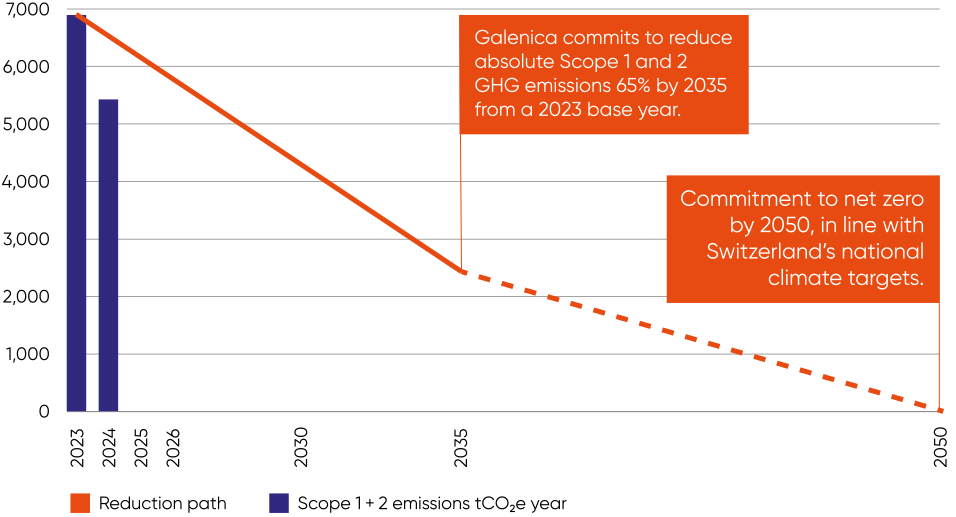
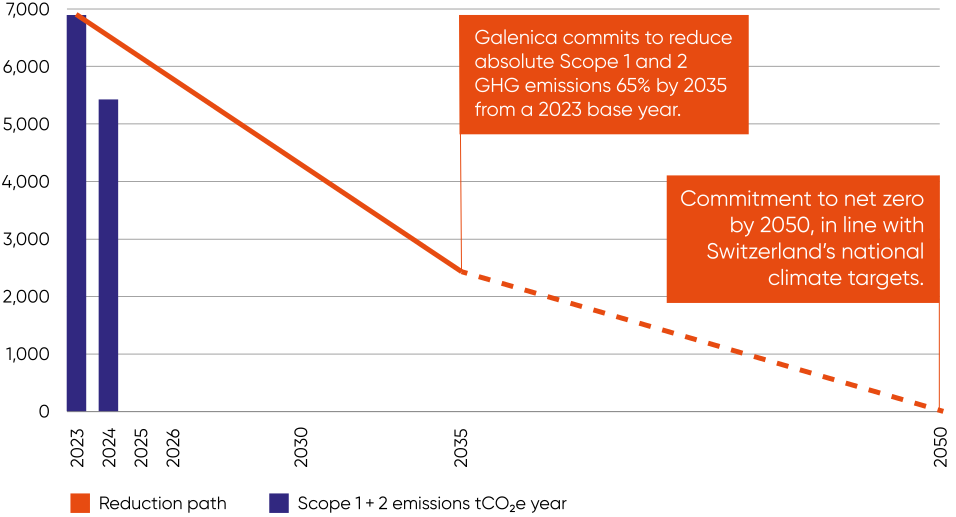
The identification of climate-related risks and opportunities encourages Galenica to reinforce sustainability as an integral part of its corporate strategy and to systematically reduce its CO2 emissions. In line with Switzerland’s national climate targets, we are committed to achieving net zero emissions by 2050. To achieve this goal, we have defined science-based interim targets (near-term targets as defined by the Science Based Targets Initiative (SBTi)) that are currently in the validation phase at SBTi. These interim targets lay the foundation for our pathway to decarbonisation and ensure that our climate strategy is aligned with global efforts to limit global warming to 1.5°C.
Targets
- Galenica commits to reducing absolute Scope 1+2 greenhouse gas emissions by 65% by 2035 (base year 2023).
- Galenica is committed to ensuring that 72% of its supplier volumes, measured against emissions in categories 1 (purchased goods and services) and 4 (upstream transport and distribution), will have scientifically sound targets by 2030.
In order to achieve these goals and increase Galenica's resilience to climate-related risks, the Group has addressed sustainability – and therefore also climate-related issues – centrally: Sustainability in all its forms is firmly rooted in the corporate strategy and an integral part of the measures working towards the decarbonisation of the Group. In 2026, Galenica also plans to develop an in-depth climate strategy that includes the reduction of total greenhouse gas emissions (all scopes) by 2050.
Integration into the corporate strategy: Sustainability is firmly rooted in the corporate strategy, the business model and the strategic areas of action and priorities. The strategic priority of “Efficiency” in particular aims to use resources sustainably and reduce CO2 emissions. The definition of group-wide objectives and measures forms the framework for resource-conserving and efficient operations.
Initiatives to reduce operational emissions: In order to mitigate potential climate risks and take advantage of the opportunities. Galenica is striving to continuously reduce its operational emissions (Scope 1+2). The activities focus on the following areas:
- Use of renewable energies: From 2025, Galenica will obtain electricity from renewable sources at all operating sites. To this end, Galenica relies on its own photovoltaic systems and heat pumps, among other things.
- Increased energy efficiency: When undertaking renovations, Galenica focuses on measures to increase energy efficiency, such as the renovation and insulation of roofs.
- Reduction of fuel consumption: In distribution, Galenica is increasingly relying on vehicles with more efficient or renewable drive systems. Vehicle capacity utilisation is also being optimised.
Reduction of Scope 3 emissions
In 2024, Galenica carried out a first complete screening of its Scope 3 emissions. In the current year, the inventory of Scope 3 emissions was further refined and fully disclosed for the first time.
The initial screening served as the basis for developing a reduction path to net zero, the associated measures and for examining a possible SBTi commitment. The main instrument in the efforts made to date in the supply chain has been the Code of Conduct for Suppliers, which also covers environmental aspects. Since 2025, Galenica has been conducting random checks to ensure compliance with the Code.
More information on the management of greenhouse gas emissions and the detailed measures and KPIs can be found in the section on energy and climate protection.