Energy and climate protection
Galenica is committed to using energy as efficiently as possible and to purposefully reducing the associated environmental impacts and climate-related risks. At the heart of this are the strategic priorities “Efficiency” and “Sustainability”, which pool together group-wide initiatives for the sustainable use of resources – with the clear aim of continuously reducing the CO2 emissions of the entire Galenica Group.
GRI 3-3
Art. 964b para. 1 CO
Art. 964b para. 2 no. 4 CO
For Galenica, energy is a key factor in the day-to-day operation of logistics centres, pharmacies and IT infrastructure. High quality requirements, compliance with good distribution practices (GDP) and the “same day” distribution of medicines throughout Switzerland require a considerable energy input. Energy consumption and the associated emissions have a direct impact on the environment and society. At the same time, climate change brings with it risks and opportunities for business success. This is why we are committed to reducing energy use and the resulting greenhouse gas emissions along the entire value chain as far as possible.
|
Impacts, risks & opportunities |
Characterisation |
|
Energy use and associated greenhouse gas emissions are the main driver of climate change. |
Negative, actual Entire value chain |
|
By reducing greenhouse gas emissions in its own operations and along the value chain, Galenica can nevertheless contribute to meeting the federal government’s climate targets. |
Positive, potential Entire value chain |
|
Regulatory developments concerning CO₂ levies and stricter energy efficiency requirements can lead to rising costs in connection with energy consumption and emissions. |
Risk, in-house operations |
|
Rising global temperatures, extreme weather events and resource shortages, for example, can lead to interruptions in the supply chain or compromise business operations. |
Risk, entire value chain |
|
Improvements in the energy efficiency of in-house operations and the introduction of renewable energies can reduce dependence on volatile energy markets. |
Opportunity, in-house operations |
GRI 3-3
Art. 964b para. 2 no. 5 CO
Our objectives
In line with Switzerland’s national climate targets, we are committed to achieving net zero emissions by 2050. To ensure this goal, we have set science-based interim targets (near-term targets according to the SBTi), which are currently undergoing validation by the SBTi.
|
Goal |
Status |
Target year |
Measurement parameter |
|
2025 |
|
2024 |
|
Galenica commits to reduce absolute Scope 1 and 2 GHG emissions 65% by 2035 from a 2023 base year |
↗ |
2035 |
tCO 2 e reduction to base year (market-based) |
|
–27% |
|
–21% |
|
Galenica also commits that 72% of its suppliers by emissions covering purchased goods and services and upstream transportation and distribution will have science-based targets by 2030 |
↗ |
2030 |
% supplier commitments |
|
54% |
|
n/a |
↗ Realistic
→ Partially delayed/critical
↘ Critical
= Achieved
× Not achieved
GRI 3-3
Art. 964b para. 2 no. 2-3 CO
Our management approach
The transition plan – and thus the consistent management of our energy consumption and the associated emissions – is at the core of managing our climate change-related impacts, risks and opportunities. The topic is therefore also embedded in various functions and processes within the Group.
Transitionsplan
The Galenica Group aims to achieve net zero greenhouse gas emissions by 2050 at the latest. To achieve this objective, science-based interim targets (SBTi) have been defined and are currently in the validation phase. For Scope 1 and Scope 2, the aim is to reduce absolute emissions by 65% by 2035 (base year 2023). In Scope 3, we strive to have at least 72% of our emissions falling under the categories 3.1 and 3.4 covered by science-based CO2 targets set by our suppliers by 2030. The roadmap includes specific milestones and measures that are reviewed annually and adjusted if necessary.
We are focusing on a wide range of measures to implement the transition plan:
- Electrification and transformation of the vehicle fleet and optimising delivery routes
- Increasing energy efficiency in buildings and infrastructure through technical and structural measures
- Purchase of 100% renewable electricity
- Introduction and further development of a group-wide supplier engagement programme to involve suppliers in the climate strategy
The progress of the individual measures is measured annually based on defined KPIs (e.g. absolute emission reduction, proportion of renewable energies, number of suppliers with science-based CO2 targets) and published in the sustainability report.
The Executive Committee of the Galenica Group is responsible for implementing and managing the transition plan. Operational implementation is carried out by the respective companies and sites, whereby the energy-intensive sites in particular – Alloga in Burgdorf, Galexis in Lausanne-Ecublens and Niederbipp as well as the Bichsel Group in Interlaken – have defined mandatory reduction pathways for energy consumption together with the Energy Agency of the Swiss Private Sector (EnAW) and the Swiss Federal Office of Energy (SFOE).
The above sites have implemented energy measures in 2025 that will be effective in the future, including:
- Galexis Lausanne-Ecublens: 85,948 kWh/a and 152.6 tCO2/a
- Galexis Niederbipp: 368,572 kWh/a and 97.1 tCO2/a
- Alloga: 4,855 kWh/a and 0.047 tCO2/a
The entire reduction pathway, cumulative to 2034, envisages savings of 1,219 MWh and 0.801 tCO2 at Alloga, 5,259 MWh and 967 tCO2 at Galexis Niederbipp and 3,199 MWh and 1,895 tCO2 at Galexis in Lausanne-Ecublens.
Target attainment is supported by group-wide guidelines and management instruments, such as an Environmental Code of Conduct, which gives all employees specific recommendations on saving energy and using natural resources sparingly at work and when travelling.
As the central steering body, the Sustainability Committee monitors progress and ensures compliance with targets. The integration of climate-related risks and opportunities into Group risk management also ensures the holistic management and continuous development of the transition plan (see climate report).
Sustainability in the vehicle fleet
Our vehicle fleet is the biggest driver of our Scope 1 and 2 emissions. We have set ourselves the goal of promoting the use of renewable energies in distribution logistics and embedding this in our distribution strategy. Our first priority is using delivery vehicles with alternative drive systems (biogas, electric). If this is not possible, we strive to increase energy efficiency by using vehicles with high energy classes. The drivers also regularly take part in driver training sessions in which they are made aware of environmentally conscious driving practices. These principles also apply to logistics service providers, which has a positive effect on our Scope 3 emissions.
As part of the switch to alternative drive systems, in 2025 we introduced another e-delivery vehicle with GDP standard and corresponding charging infrastructure at the Galexis distribution centre in Lausanne-Ecublens. As a result, at the end of 2025 two vehicles powered by biogas and one electrically powered GDP delivery vehicle were in use – out of a total fleet of 168 GDP vehicles. The conversion of the vehicle fleet to alternative drive systems entails a number of challenges: the limited range and long charging cycles of vehicles and cargo compartment refrigeration units result in an efficiency of only around 50% compared to their service life. From a financial perspective, too, the higher procurement costs are also hampering the rapid company-wide roll-out of a GDP fleet.
In order to increase the energy efficiency of conventional vehicles, our joint venture partner Health Supply is limiting their maximum speed. In lorry deliveries, our pre-wholesale and wholesale partner companies are increasingly using commercial vehicles that meet the highest emission standards (currently Euro VI) and delivery routes are continuously optimised with regard to efficiency (avoidance of empty drives, etc.) in order to make the service provided to customers as sustainable as possible. As a result, well over 100,000 km were saved in 2025, including at Galexis, despite growing transport volumes.
Galenica also supports sustainability initiatives for logistics companies within the framework of associations (e.g. GS1) and in collaboration with authorities and other public institutions (e.g. hospitals). Moreover, the proportion of alternatively powered personal company vehicles is being steadily increased.
Vehicle energy consumption declined further year-on-year to a total consumption of 14,054 MWh, which is equivalent to a decline of 6.1% on the previous year.
Focus on increasing energy efficiency during renovations
To reduce our heat consumption, we continually explore ways to increase the energy efficiency of our buildings and infrastructures. In doing so, we rely on various technical and structural measures that are tailored to the local conditions.
These include the use of district heating, improved insulation, for example the thermal insulation and optimised air compressors in operation at Alloga, as well as energy-efficient construction methods such as the Minergie Eco concept implemented by Lifestage Solutions. Heat pumps are also used at several locations – for example, Galexis in Niederbipp and Alloga in Burgdorf use groundwater as an energy source. In addition, state-of-the-art measurement and control technology ensures precise management and optimisation of energy use at Galexis in Niederbipp. In the reporting year, with consumption of 4,161 MWh, we were able to save around 400 MWh (previous year 4,567 MWh) in electricity purchases, while maintaining our own PV consumption at around 1,650 MWh. Due to a lightning strike, the interruption-free supply of power to the data centre was damaged and had to be supported by the emergency generator (consumption: 938 MWh).
At Galexis in Lausanne-Ecublens, too, we were able to reduce heat consumption (total 474 MWh) by 59 MWh in the reporting year (previous year 533 MWh) by switching to district heating. The district heating is generated by wood pellets and has replaced natural gas heating.
Thanks to these measures, the Galenica Group’s heat consumption was further reduced in the reporting year: in 2025, heat consumption amounted to 5,781 MWh (2024: 5,973 MWh).
However, the heat supply to our pharmacy locations can only be influenced to a limited extent, as these are mostly located in rented properties and structural or technical modifications cannot be carried out directly by Galenica. Consequently, the resulting emissions are included in our Scope 3 emissions.
Maximising the share of renewable electricity
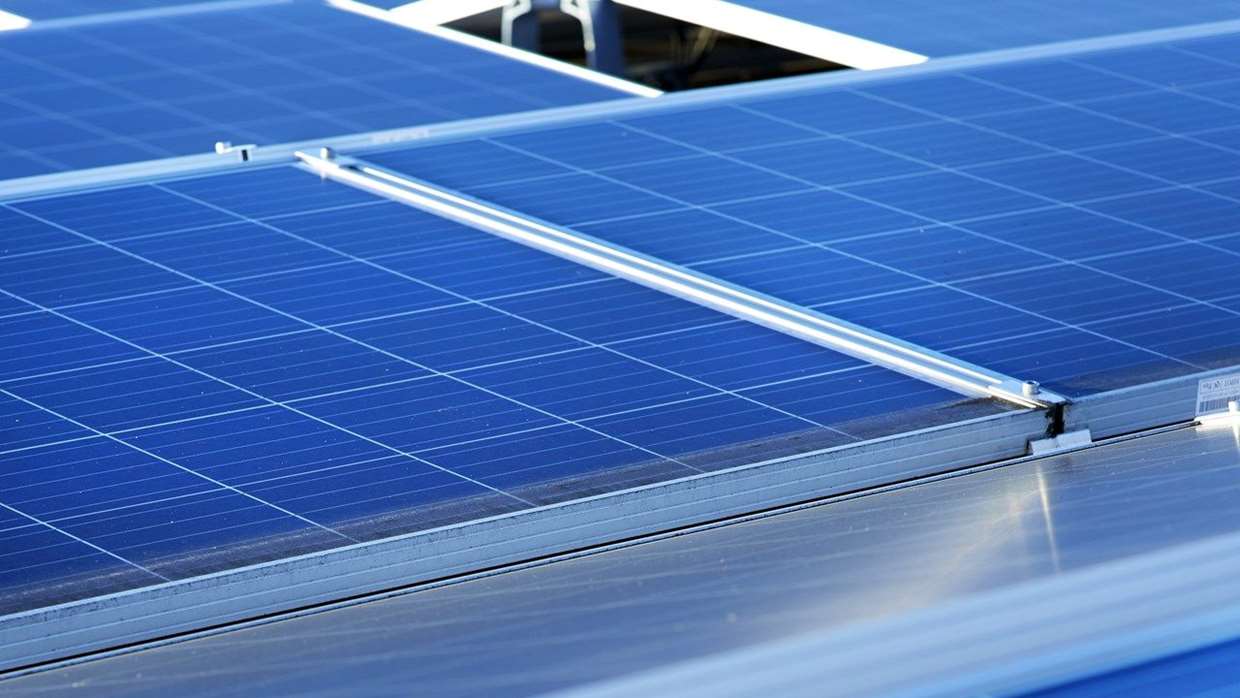
Electricity is the most important energy source within the Galenica Group and – excluding heat pumps and electric vehicles – accounts for around 56% of our total energy consumption. Due to the central role of electricity, it was particularly important to decarbonise this area at an early stage. In 2025, Galenica’s electricity consumption rose to 24,499 MWh (previous year: 23,341 MWh), which corresponds to an increase of 5.0%. Our companies cover a certain portion of their needs with a variety of renewable energy sources. At six locations, we can obtain some of our electricity from solar panels on the roofs of the buildings. At the Galexis and Bichsel sites, these PV systems are owned by the company. We cannot use all of the solar power we generate ourselves (2025: 1,646 MWh) for our own needs. In 2025, we therefore fed 468 MWh of solar energy back into the grid. Hydropower accounts for the majority of our renewable electricity supply. In 2025, Bichsel purchased 100% hydropower directly from the electricity supplier. Galenica purchases guarantees of origin for certified hydropower every year for its remaining operational and administrative sites. For 2025, we already purchased guarantees of origin for 17,500 MWh in the reporting year. Together with the companies’ direct procurement, this results in a share of renewable electricity in total consumption of 89% (this basis was used to calculate the market-based emissions for the reporting year).
In 2021, we set ourselves the goal of sourcing electricity exclusively from renewable sources for our own operation by 2025. To achieve this goal, we will purchase guarantees of origin in the first quarter of 2026 to cover the remaining electricity supply. This approach means that 100% of our electricity supply will come from renewable sources such as hydropower and solar energy.
GRI 302-1, 302-2, 302-3, 302-4
Art. 964b para 2 no. 5 CO
Total energy consumption
Total energy consumption within the Galenica Group increased marginally in the reporting year compared to the previous year (44,334 MWh vs. 44,278 MWh in 2024), which, however, corresponds to an increase of just 0.1%. Relative to the size of the company, energy consumption actually decreased, with energy intensity falling by 6.6%.
|
Aspect |
GRI Disclosure |
Unit |
2025 |
2024 1) |
2023 1) (Base Year) |
|
Energy consumption within the organisation ► |
302-1 |
MWh |
44,334 |
44,278 |
46,048 |
|
- Non-renewable sources |
302-1 |
MWh |
20,282 |
21,931 |
32,189 |
|
- Renewable sources |
302-1 |
MWh |
24,051 |
22,347 |
13,859 |
|
- Electricity consumption |
302-1 |
MWh |
24,499 |
23,341 |
23,557 |
|
- Heat energy consumption |
302-1 |
MWh |
5,781 |
5,973 |
7,661 |
|
- Vehicle energy consumption |
302-1 |
MWh |
14,054 |
14,964 |
14,830 |
|
- Employees at reporting date (FTE) |
|
FTE |
6,558 |
6,119 |
5,907 |
|
Energy intensity within the organisation |
302-3 |
MWh/FTE |
6.76 |
7.24 |
7.80 |
|
Energy consumption outside of the organisation ► |
302-2 |
MWh |
26,055 |
28,013 |
25,105 |
|
- Upstream transport and distribution |
302-2 |
MWh |
16,485 |
18,466 |
13,528 |
|
- Leased real estate |
302-2 |
MWh |
9,569 |
9,547 |
11,578 |
► 2025 Data externally assured (limited assurance)
1) Values restated (compare note calculation basis)
GRI 305-1, 305-2, 305-4, 305-5
Art. 964b para. 2 no. 5 CO
Art. 3 CPO
Reduction of operational emissions (Scope 1+2)
In the reporting year, operational emissions (Scope 1+2) were reduced from 5,433 tCO2e to 5,024 tCO2e. This corresponds to a decrease of 7.5% compared to the previous year or 27.2% compared to the base year 2023. The main reasons for the year-on-year reduction are lower refrigerant losses and a more environmentally friendly electricity mix (market-based approach) with lower emission factors.
Thanks to the use of a wood pellet heating system at the temporary headquarters in Bern, biogenic emissions (out of scope) increased by around 57.5% to 394 tCO2e.
|
Aspect |
GRI Disclosure |
Unit |
2025 |
2024 1) |
2023 1) (Base Year) |
|
Direct and indirect GHG emissions (Scope 1+2) ► |
|
tCO₂e |
5,024 |
5,433 |
6,901 |
|
Scope 1: fuels and combustibles |
305-1 |
tCO₂e |
4,854 |
5,150 |
5,865 |
|
Scope 2: electricity and district heat (market-based approach) |
305-2 |
tCO₂e |
171 |
283 |
1,036 |
|
- Employees at reporting date (FTE) |
|
FTE |
6,558 |
6,119 |
5,907 |
|
Intensity of GHG emissions (Scope 1+2) |
305-4 |
tCO₂e/FTE |
0.77 |
0.89 |
1.17 |
|
Scope 2: electricity and district heat (location-based approach) |
305-2 |
tCO₂e |
1,459 |
2,240 |
2,188 |
► 2025 Data externally assured (limited assurance)
1) Values restated (compare note calculation basis)
GRI 305-3, 305-4, 305-5
Art. 964b para. 2 no. 5 CO
Art. 3 CPO
Scope 3 emissions
In 2024, as part of our sustainability strategy, we carried out a comprehensive Scope 3 screening for the first time to systematically record the indirect greenhouse gas emissions resulting from Group processes and flows of goods. This was based on actual consumption data and activity-based values from 2023, supplemented by estimates based on standards and statistical data. At the start of 2025, Scope 3 screening was harmonised and refined to align with the scope of consolidation for financial accounting. This made it possible to cover approx. 98% of Scope 3 emissions.
The results clearly show that category 1 “Purchased goods and services” accounts for the largest share of upstream and downstream emissions, making up 92% of total Scope 3 emissions. Other relevant categories are “Capital goods” (category 2), “Fuel and energy-related activities” (category 3), “Upstream transportation and distribution” (category 4), “Employee commuting” (category 7), “Upstream leased assets” (category 8) and “Investments” (category 15).
As Scope 3 emissions account for almost 99% of total emissions along Galenica’s value chain, their reduction is key to the Group’s climate protection strategy.
|
Aspect |
GRI Disclosure |
Unit |
2025 |
2024 1) |
2023 1) (Base Year) |
|
Scope 1+2: Direct and indirect GHG emissions ► |
305-1 |
tCO₂e |
5,024 |
5,433 |
6,901 |
|
Scope 3: other GHG emissions ► |
305-3 |
tCO₂e |
396,400 |
378,700 |
374,000 |
|
Category 1 - Purchased goods & services |
305-3 |
tCO₂e |
364,000 |
343,000 |
339,000 |
|
Category 2 - Capital goods |
305-3 |
tCO₂e |
14,000 |
18,000 |
19,000 |
|
Category 3 - Fuel- and energy-related activities |
305-3 |
tCO₂e |
1,300 |
1,300 |
2,000 |
|
Category 4 - Upstream transportation & distribution |
305-3 |
tCO₂e |
5,600 |
6,100 |
4,800 |
|
Category 7 - Employee commuting & home office |
305-3 |
tCO₂e |
4,500 |
4,100 |
4,000 |
|
Category 8 - Upstream leased real estate |
305-3 |
tCO₂e |
1,800 |
1,800 |
1,900 |
|
Category 15 - Investments |
305-3 |
tCO₂e |
5,200 |
4,400 |
3,300 |
|
- Employees at reporting date (FTE) |
|
FTE |
6,558 |
6,119 |
5,907 |
|
Intensity of GHG emissions (Scope 3) |
305-4 |
tCO₂e/FTE |
60.45 |
61.89 |
63.31 |
► 2025 Data externally assured (limited assurance)
1) Values restated (compare note calculation basis)
Scope 3 target and roadmap
Based on a refined Scope 3 screening, Galenica has defined a strategic target – a key component of our climate strategy – and a roadmap. The target is in line with the requirements of the Science Based Targets initiative (SBTi) and focuses on supplier engagement. For the particularly emission-relevant categories 1 (“Purchased goods and services”) and 4 (“Upstream transportation and distribution”), we have set ourselves the target of ensuring at least 72% of our emissions in categories 3.1 and 3.4 are covered by science-based CO2 targets that have been implemented by our service providers and suppliers by 2030.
To achieve this goal, suitable processes and structures must first be established – an aspect that is also reflected in our roadmap. The focus here is on establishing a supplier engagement programme, which will govern systematic collaboration with our suppliers in the area of climate protection from 2026. In addition to supplier engagement, we are striving to improve the basis for calculating Scope 3 emissions, for example by gradually integrating supplier-specific information.
During the evaluation phase for a supplier engagement programme, current coverage was determined for the first time in summer 2025 using consumption data from 2024. According to this first analysis, in the summer of 2025, 54% of supplier volume (measured by category 1 “Purchased goods and services” and 4 “Upstream transportation and distribution”) had science-based climate targets.
Scope 3 - Roadmap
|
2024 |
2025 |
2026 |
2027-2030 |
|
- Full Scope 3 screening |
-Adjustment of Scope 3 screening -SBTi objective |
-Establishment of supplier engagement programme -Expansion of the calculation for product emissions |
-Implementation of supplier engagement -Improving the database: from screening to inventory |
Supplier Code of Conduct
As part of our Scope 3 management, the existing Supplier Code of Conduct is a key tool for reducing indirect greenhouse gas emissions along the value chain. Our supply partners undertake to limit the emissions from their activities as far as technically and economically possible and to regularly review their environmental behaviour to ensure that it complies with the law. They are guided by the goals of sustainable value creation and the responsible use of resources and comply with all relevant regional, national and international environmental regulations. The Supplier Code of Conduct must be signed by all supply partners. Compliance with the requirements is checked annually on a random basis (further information can be found in the chapter Supply chain integrity).
Adapted mobility concept from 2026
In addition to the targets set for categories 1 and 4, Galenica has already developed a targeted concept to reduce emissions in category 7, “Employee commuting”. Galenica promotes the use of public transport and electromobility through financial contributions towards commuting costs and location-specific mobility concepts, for example at its headquarters in Bern or at Galexis in Lausanne-Ecublens. Here, the available parking spaces were reduced as part of renovation work and employees were actively encouraged to form carpools and use public transport. The group-wide company car policy was amended in favour of e-mobility as early as 2022. Furthermore, no new company vehicles will be procured from 2026 onwards – with the exception of vehicles for sales representatives. To further increase the use of public transport, Galenica will be offering all employees a Half Fare travelcard as of 2026.