Our sustainability approach
Sustainability is an integral part of Galenica’s corporate management. This is based on the steadfast belief that proactive and responsible action contributes significantly to the long-term economic success of a company and has an impact both within and outside a company.
Our sustainability principles
Our economic success is based on taking responsibility for society and the environment.
This conviction is reflected in the three key sustainability goals of the Galenica Group. Supported by the Executive Committee, they form an essential part of the Group’s corporate culture.
Value of the company
We increase the value of the company in the long term by having a sustainable impact.
Employees
We oblige our employees to act responsibly and ensure they have a safe, flexible and supportive working environment.
Resource efficiency
We use resources sparingly and efficiently and reduce negative environmental impacts.
With these guiding principles, we educate and motivate employees to continuously increase our resource efficiency, capacity for innovation and, ultimately, competitiveness. On the other hand, the lively, ongoing dialogue with the various stakeholders helps to identify requirements and expectations at an early stage and to maintain Galenica’s strong reputation.
Our key sustainability topics are integrated into our corporate vision and strategic fields of action and are therefore part of our corporate strategy.
GRI 2-12, 2-13, 2-14, 2-17
Art. 3 CPO
Sustainability organisation
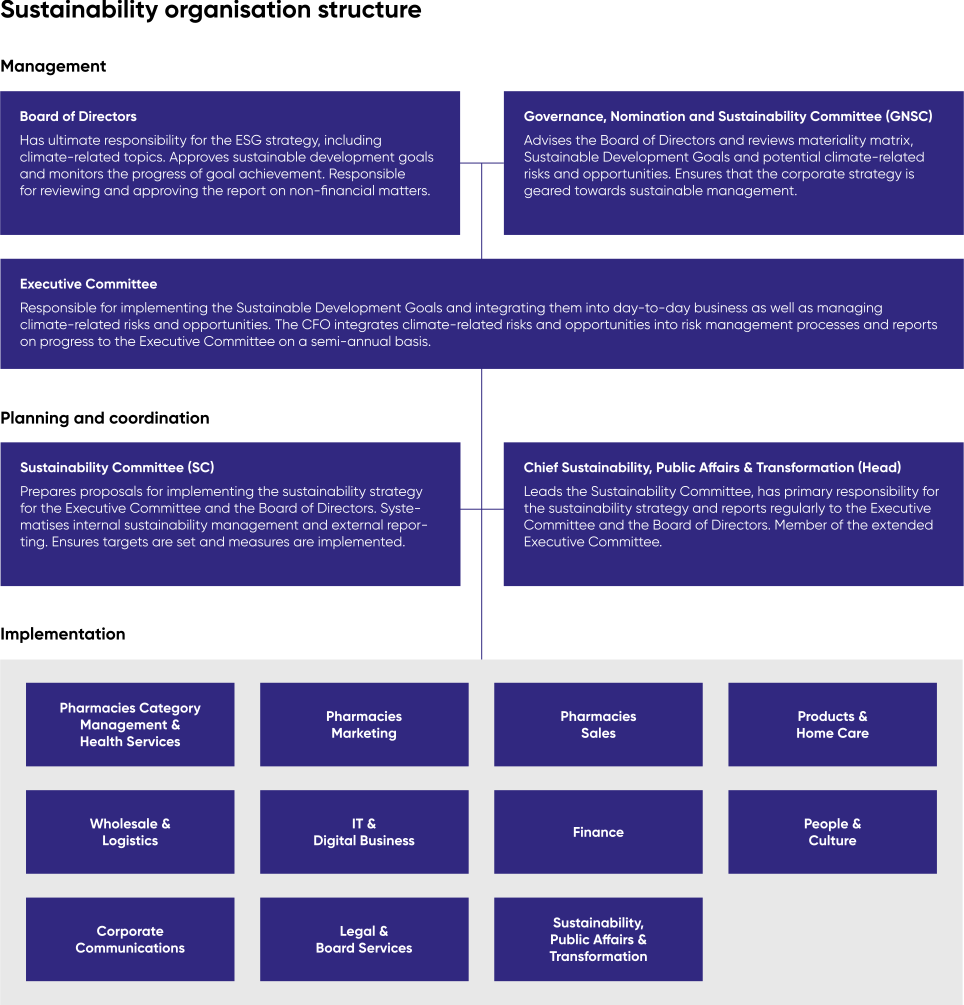
Sustainability at Galenica is organised in a multi-level manner and is not relegated to a separate department. Sustainability is coordinated via the Sustainability Committee (SC), while responsibility is divided across multiple different levels.
GRI 2-16
Sustainability and its associated responsibilities are discussed by the various committees at regular intervals several times a year.
- The Board of Directors, which approves the Sustainable Development Goals and monitors the progress of target achievement, discussed the topic of sustainability and climate matters four times in 2025, taking into account the assessment of the Governance, Nomination and Sustainability Committee (GNSC).
- The Sustainability Committee (SC) met four times with all members in attendance in the reporting year. The focus was on the climate risk analysis, SBTi, the materiality analysis, customer satisfaction and employee health. In between the full meetings, several meetings were held in individual working groups to discuss the progress of the Sustainable Development Goals and the implementation of measures that were further specified or already implemented directly in the responsible areas in 2025.
- The aspects relevant to the Executive Committee for the implementation of the sustainability strategy were introduced and discussed in this committee by the Chief Sustainability, Public Affairs & Transformation at least four times a year. No critical matters were reported to the Board of Directors during the reporting year.
GRI 2-14, 3-1, 3-2
Art. 964b para. 2 no 1. CO
Materiality analysis and matrix
As in 2023, we again carried out a materiality analysis based on the principle of double materiality in the reporting year. This ensures that we continue to focus on sustainability topics that are relevant to Galenica. The resulting updated materiality matrix was reviewed and approved by the Executive Committee and the Board of Directors.
The starting point for the process was a list of around 40 topics consisting of sustainability standards, legal requirements on non-financial reporting, the important topics to date and a peer analysis. This information was broken down into 13 potentially relevant areas, which largely coincided with the previous ones. The selection of topics was checked and confirmed in interviews with industry experts for completeness. Internal and external stakeholders – including investors, partners, suppliers, employees and associations – assessed the potentially important topics from two perspectives based on an online survey in accordance with the principles of double materiality:
- Financial relevance for Galenica (outside-in perspective)
- Relevance for the social, environmental and economic environment of Galenica (inside-out perspective)
The results of the survey are visualised in the matrix below. A topic is considered material if it has a medium to high impact on the environment and society or is of medium to high business relevance. On this basis, ten topics were classified as material. These have been divided into the areas of “Focus” and “Manage” for further strategic prioritisation. The “Focus” topics are of particular strategic relevance to Galenica’s business model. Three of the topics examined are below the threshold and are not currently among the material topics, but will continue to be monitored.
Further information on managing the material topics can be found in the Sustainability organisation section and in the GRI Report.
Note on the graphic: Click on the different icons in the graphic for interactive information.
Patient safety
This topic concerns all the effects of products and services on the well-being of patients. This includes the safety and quality of therapeutic products as well as the quality of information and services. Patient safety and health are a top priority for us.
Security of supply and procurement
This topic describes how to ensure that the population is supplied with medicinal products. Bottlenecks in the supply chain of medicines and medical products are increasing around the world, including in Switzerland. As a result, reliable procurement and supply of medicinal products to the population are becoming increasingly important for us as a healthcare network.
Data protection and IT security
This topic covers the data protection of customers, patients, employees and other persons. Health data classified as particularly sensitive requires extensive protective measures, which we implement in full. We ensure that sensitive information and data are protected against unauthorised access, modification and loss.
Health promotion
In view of the ageing population, preventive healthcare and prevention are important measures to promote the well-being and health of the Swiss population. We have embedded this approach as a core part of our strategy. The aim is to be the point of contact for healthcare advice for people in pharmacies, digitally or at home and thus to guarantee nationwide, low-threshold access to healthcare services.
Ethical business conduct
We attach great importance to conducting our business activities in an ethical and legal manner. All business activities are carried out in accordance with the applicable laws as well as in-house or industry codes. Key topics for us include combating corruption and anti-competitive behaviour as well as compliance with the Ordinance on Integrity and Transparency in the Context of Therapeutic Products (OITTP).
Attractive workplace
More than 8,000 employees give their best every day for the health and well-being of our customers. As a key employer in the Swiss healthcare market, Galenica makes an important contribution to the Swiss economy and supports sustainable labour and economic growth. In our view, an attractive workplace includes employment conditions, training and development opportunities, and an appreciative corporate culture. These factors influence employee satisfaction, motivation and well-being and, in turn, their efficiency, productivity as well as turnover.
Health and safety at work
This topic covers the effects of our business activities on the physical and mental well-being of all employees. Galenica is responsible for the safety and health protection of its employees and is obliged to prevent any injury to the physical or psychological integrity of its employees in the workplace.
Supply chain integrity
We ensure that both we as a company and our business partners comply with internationally and nationally applicable laws and norms as well as industry-specific standards, good practices and human rights. We also comply with our due diligence obligations (e.g. in relation to conflict minerals). This ensures decent work, fair wages and equality in the supply chain, which has a positive effect on the industry and promotes sustainable economic growth in Switzerland.
Energy and climate protection
Our business activities have a direct impact on the environment and climate. We use renewable and non-renewable resources to provide our services. These processes generate gaseous, liquid and solid waste products as well as greenhouse gases. We make every effort to use natural resources sparingly and efficiently and to reduce negative environmental impacts.
Equality and diversity
The theme of diversity and equal opportunity involves topics of equality and equal treatment with regard to age, origin, gender and other diversity indicators. The diversity of employees also benefits the innovative capacity, success and attractiveness of the company as an employer. We are committed to diversity and equality and bring together people from over 85 nations and all age groups.
Our Sustainable Development Goals
The Sustainability Committee defined specific Sustainable Development Goals, which were approved for the first time by the Board of Directors in late 2021. Since then, these goals have been regularly monitored and modified. Following the revision in 2024, the Sustainability Committee reviewed the goals again in the reporting year and fleshed them out in greater detail – in particular the environmental targets, which are now defined as science-based climate targets in accordance with the requirements of the Science Based Targets initiative (SBTi). The Executive Committee and the Board of Directors have approved all the changes.
Further information: Select an area to learn more about our goals.
Corporate governance
We raise awareness of compliance issues among our employees at least six times a year, tailored to the respective target group.
We raise awareness of data protection among our employees at least six times a year, tailored to the respective target group.
We raise awareness of IT security and cybercrime among our employees at least six times a year, tailored to the respective target group.
We achieve an annual service level of 99% in the pharma sector.
Patients and customers
We will increase the use of Clinical Decision Support Checks (CDS.CE) to 500 million by 2025 and 1 billion by 2030.
We expect our suppliers to comply with the Supplier Code of Conduct and verify this with at least 10 random checks per year.
Customer satisfaction is at the centre of all activities. The satisfaction of end customers is systematically measured by their willingness to recommend us to others (rNPS) and the gap compared to the average of the competition is determined.
We will increase the number of healthcare services provided by 10% each year until 2027 (base year 2023).
Employees
Employee survey “Opinio”: The aim is to achieve a participation rate of over 75% and a motivation rate of between 75 and 80.
We are reducing the time-to-hire by 10% by 2027 (base year 2023 for Pharmacies Sales, 2024 for all other areas).
We will improve diversity in all units and group companies, keeping the proportion of women in management positions at 50% and increasing the proportion of women in senior management to 33% by 2027.
We will reduce the absenteeism rate due to occupational accidents and illnesses (physical and mental) by 10% (base year 2023).
Environment
Galenica commits to reducing absolute Scope 1 and 2 GHG emissions 65% by 2035 compared to 2023 base year.
We commit to setting science-based targets for 72% of our supplier volume, measured by emissions in categories 1 (purchased goods and services) and 4 (upstream transport and distribution) by 2030.
We are committed to achieving net zero by 2050, in line with Switzerland’s national climate targets.
Specifically, the following changes were made to the target wordings in the reporting year:
For all three targets in the area of corporate governance, the phrase “several times a year” was replaced with the specific number of times the measures are carried out. This makes the target easier to measure and makes the extent to which the target is achieved more meaningful.
In order to link the material topic of “security of supply and procurement” with a Sustainable Development Goal, the target “We will achieve an annual service level of 99% in the pharma sector” has now been set. We had already identified this figure in the past, but had not linked it to a specific goal.
The target has been adapted to the topic of the “employee survey”. Instead of a continuous annual increase, which is capped, we set a target minimum value. We have also provided the motivation rate with a specific value range, which makes this key figure more relevant. The aim is to maintain the high level of motivation.
In addition to the proportion of women in management positions (management and senior management), the goal relating to equality and diversity was extended to include the target of 33% in senior management in order to embed the spirit of this ambition in senior management positions, too.
From 2026, we will also require consistent compliance with the Supplier Code of Conduct in addition to the annual review of at least 10 suppliers. Violations will result in appropriate action being taken based on the findings.
After completing a full Scope 3 screening for the first time in 2024, we devised science-based reduction targets across all scopes in 2025. The previous energy and emissions targets will be replaced by these new targets, which are currently being validated by SBTi. As a result, the base year is being adjusted from 2021 to 2023.
With the measures taken and implemented in 2025, we were able to achieve most of our targets. Due to new or revised processes and expanded data bases, some targets will be slightly delayed or have been adjusted based on new insights.
Further information on progress towards our Sustainable Development Goals can be found in the GRI Report.
GRI 2-29
Art. 964b para. 2 no 1. CO
Dialogue with stakeholders
Meaningful stakeholder engagement is characterised by continuous two-way communication and depends on the goodwill of all those involved. To promote successful collaboration, we rely on regular dialogue via various communication channels. This allows the various stakeholder groups to proactively voice their concerns and expectations of the company at any time. We address the resulting topics and shape further dialogue in line with the current challenges and needs of our stakeholders. This ensures that the topics are relevant to the target group and that the dialogue brings added value for both sides. The Executive Committee regularly discusses the concerns and priorities of the various stakeholder groups and reports to the Board of Directors. In this way, stakeholder concerns are incorporated into the decision-making process as far as possible.
|
Stakeholder group |
Why we are committed |
How we are committed |
Topics discussed in 2025 |
|
Customers |
Increase customer satisfaction |
Customer surveys |
Satisfaction with healthcare services |
|
Determine potential for improvement |
|
Low-threshold access to healthcare services |
|
|
Shareholders |
Increase trust in the company |
Dialogue at AGM |
Galenica’s role in Swiss healthcare |
|
Cashflow |
Annual communication via Annual Report |
Further development of the company |
|
|
Galenica as an attractive and secure investment |
Investor Day and roadshows |
Innovation and new business areas |
|
|
|
Direct investor dialogue |
|
|
|
Suppliers |
Continuous improvement process in quality management |
Code of Conduct for Suppliers |
Quality aspects |
|
Transparency |
Direct dialogue between purchasing and delivery partners |
Costs and prices |
|
|
Providing a seamless service |
Satisfaction survey of key suppliers |
Innovations |
|
|
Supply chain integrity |
Safety Stock Initiative |
Supply chain integrity |
|
|
Ensuring ability to deliver |
|
Product availability |
|
|
Scientific institutions |
Promoting young talent |
Financing of the Chair of the University of Bern (Pharmacy) |
Quality of teaching |
|
Co-financing of Professorship of Practice at ETH Zurich |
|||
|
Training for healthcare professions |
Lectures on vocational training |
Attractiveness of healthcare professions (retail pharmacy) |
|
|
Current and potential employees |
Attracting and retaining qualified employees |
Active recruitment |
Galenica as an attractive employer |
|
Employee satisfaction and motivation |
Fringe benefits |
Attractiveness of healthcare professions |
|
|
|
Fair employment conditions |
|
|
|
|
University marketing/events |
|
|
|
|
Position Galenica as an employer of choice |
|
|
|
Authorities and associations |
Political influence |
Membership of association boards |
Galenica’s role in Swiss healthcare |
|
Ensuring sustainable business operations |
Regular dialogue with relevant associations |
Opportunities and risks of liberalisation in the healthcare sector |
|
|
|
Meetings with politicians, authorities |
Costs/cost containment |
GRI 2-28
Memberships of associations and interest groups
Galenica is involved in various healthcare and industry associations in order to represent its interests. Membership in these organisations allows us to help shape the framework conditions for Galenica and strengthen our network. In addition, we gain new insights into our business activities through exchanges with other companies and organisations. In the period under review, Galenica was a member of the following associations and interest groups:
ASSGP, Association of the Swiss Self-Medication Industry
Association QualiCCare, Association for the Improvement of Quality in Treatment of Chronic Diseases in Switzerland
ASTAG, Swiss Commercial Vehicle Association
Avenir Suisse, Switzerland’s liberal think tank
Blistersuisse, the association of major professional blister packers in Switzerland
Freedom Healthcare Alliance
CAP, Centre d’Animation des Pharmaciens de Suisse
FAMH, Association of Swiss Laboratories
Fédération des industries Alimentaires Suisses (FIAL)
FMH, professional association for continuing medical education
GESKES, Society for Clinical Nutrition in Switzerland
Gesellschaft für Marketing, Marketing Society
GIRP, European Healthcare DistributionAssociation
GRIP-Pharma, Groupement Romand de l’Industrie Pharmaceutique
GSASA, Swiss Association of Public Health Administration and Hospital Pharmacists
GS1 Switzerland, organisation for standards and solutions as the basis for digitalisation Helvecura Genossenschaft, compulsory storage organisation for therapeutic products
IHE Suisse, association for technical data exchange in healthcare
Interessengemeinschaft eHealth, e-health interest group
International Federation of Clinical Chemistry and Laboratory Medicine (IFCC)
KEIS, Verein Kunststoffentorgung in der Schweiz (Association for Plastic Disposal in Switzerland)
Medswiss.net Sponsoring Association, Swiss umbrella association of medical networks
pharmalog, Swiss Pharma Logistics Association
pharmaSuisse, Swiss Association of Pharmacists
Refdata, Refdata Foundation
SANI, Swiss Association of Nutrition Industries
SanteneXt, the Do Tank of the Swiss healthcare system
ScienceIndustries, Business Association for Chemistry-Pharma-Biotech
SGSH, Swiss Society of Hospital Hygiene
Sitem-Insel AG, research and development activities
SKW, Swiss Cosmetics and Detergent Association
SSCC, Swiss Society of Clinical Chemistry
Swiss Healthcare Startups, leading networking organisation for the Swiss healthcare ecosystem
Swiss Medtech, Swiss Medical Technology Association
Swiss Society for Medical Informatics
GFH, Healthcare Retailers Association
VEZ, Electronic Payments Association
VGUA, Association of Independent Pharmacies
VIPS, Association of Pharmaceutical Companies in Switzerland
VSV, Swiss Mail-order Trade Association
VSVA, Association of Swiss Mail-Order Pharmacies SMVO, Swiss Medicine Verification Organisation
SVKH, Swiss Association for Therapeutic Products in Complementary Medicine
Swissholdings, Association of Industrial and Service Groups in Switzerland
VNL Switzerland, Verein Netzwerk Logistik e.V. (Network Logistics Association)
VWG, National Economic Society of the Canton of Bern
Our contribution to the Sustainable Development Goals
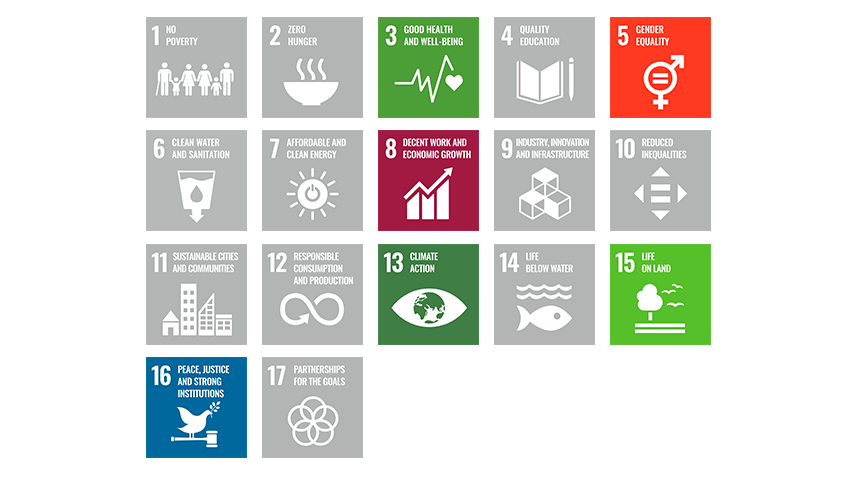
The Sustainable Development Goals (SDGs) form the global reference framework for sustainable development. The Galenica Group is committed to the SDGs. As the largest network in the Swiss healthcare market, we make an important contribution to SDG 3 (Good health and well-being). This goal is at the heart of our business activities and is in line with our vision of doing the best for the health and well-being of our customers every day. In addition, our corporate activities contribute to SDG 5 (Gender equality), SDG 8 (Decent work and economic growth), SDG 13 (Climate action) and SDG 16 (Peace, justice and strong institutions).

The safety, health and well-being of our patients are our top priority. We reinforce this self-image with several Sustainable Development Goals that relate to the following material topics: patient safety, health promotion and security of supply and procurement. The physical and mental health of our employees is also a high priority at Galenica. This is why we take targeted precautions to protect the health and safety of all employees in the workplace.

We are committed to diversity and equal opportunity. The Galenica network brings together people from more than 85 countries and all age groups. Three quarters of our employees are women. Our Code of Conduct states that we do not tolerate any discrimination or harassment. With the Sustainable Development Goal on this topic, we are aiming to improve diversity in all areas and companies and to retain or increase the proportion of women in management positions.

We strive to offer attractive jobs both to bring in and retain the necessary specialists in healthcare professions and IT, and to purposefully promote the next generation of young talent. Our employees are key to our success. We consistently promote employee motivation and development by offering our employees attractive and fair employment conditions, modern and flexible working models and various programmes and opportunities for further development. Through all these measures, we are supporting and contributing to sustainable labour and economic growth in Switzerland. We measure our ambition based on two specific Sustainable Development Goals.

We promote the use of renewable energies in distribution and the use of public transport and electric cars by our employees. We endeavour to increase energy efficiency and are investigating the installation of solar panels. We have also set specific targets for reducing greenhouse gas emissions and replacing fossil fuels, which we measure and report through several targets in this area.

With digitalisation in healthcare, the importance of IT security and data protection is increasing. Galenica protects patient and customer data as well as internal information against unauthorised access and loss. We attach great importance to conducting our business activities in an ethical and legal manner. All of our business activities are conducted in accordance with applicable laws, and respect for human rights is non-negotiable for us. We also ensure that human rights are upheld and require our suppliers to comply with the Supplier Code of Conduct. With all these measures, we strengthen trust and contribute to an inclusive society and strong institutions.